Are you planning a barn or paddocks in Loudoun County and wondering how to make them work in our wet springs and humid summers? You are not alone. The right design saves hours each week, protects your pastures, and keeps horses healthier in every season. In this guide, you will learn stall and aisle dimensions that fit real use, ventilation that controls moisture, and paddock layouts that reduce mud and labor. Let’s dive in.
Loudoun conditions you should plan for
Climate and rainfall
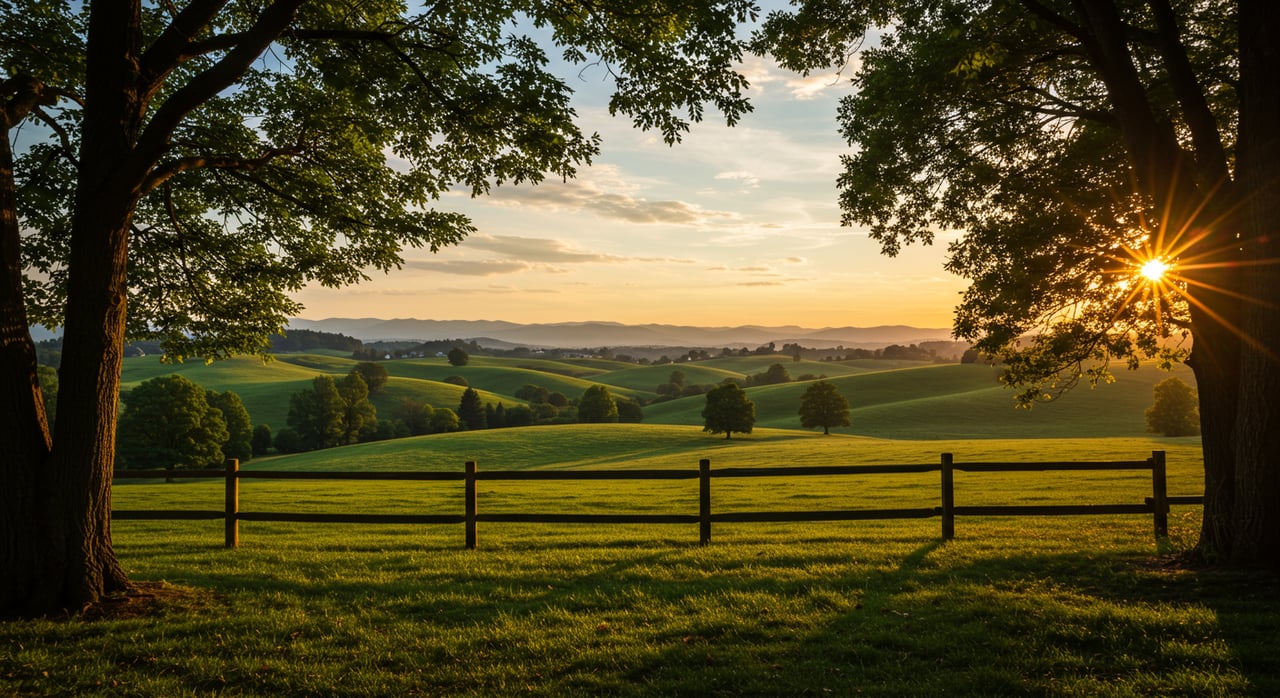
Loudoun sits in a humid mid-Atlantic zone with warm summers, cold winters, and about 40 to 45 inches of annual rainfall spread through the year. Spring brings strong pasture growth, while summer heat can stress grass. Expect wet periods and freeze-thaw cycles that create mud in high-use areas. Your barn ventilation and paddock surfacing should be designed to manage moisture year-round.
Soils and slopes
County soils range from well-drained upland loams to heavier clays and shallow, rocky areas. On many sites you can build well-drained sacrifice areas, but poorly drained soils often need engineered surfacing and added drainage. Use slopes to move water away from structures and traffic lanes. Orient barns and arenas so runoff flows to vegetated areas rather than into stalls, gates, or driveways.
Zoning and water quality
Before you build or expand, confirm local setbacks, stream buffers, and any rules related to nutrient management. Many properties fall within the Chesapeake Bay watershed, where sediment and nutrient controls matter. Higher-density operations may have stricter expectations for manure handling and runoff protection. A quick call to county planning and conservation offices early in your process can prevent redesigns later.
Barn layout that works here
Stall counts and sizes
For most adult riding horses, 12 by 12 feet is a practical minimum. Larger horses or broodmares do well with 12 by 14 or 12 by 16. Plan stall counts around your current herd plus future needs, and include at least one spare stall for isolation or visitors. Hobby properties often run 3 to 6 stalls. Small boarding or training programs typically need 6 to 12 or more, plus dedicated tack and feed spaces.
Aisle widths and surfaces
For safe handling and equipment movement, target aisles of 10 to 12 feet. If you plan to drive tractors, hay wagons, or larger mowers inside the barn, go 12 to 14 feet and verify turning space. Use non-slip, durable surfaces like rubber matting over concrete, broom-finished concrete, or pavers. Pitch aisles so puddles do not form after rain or wash-downs.
Ventilation and air quality
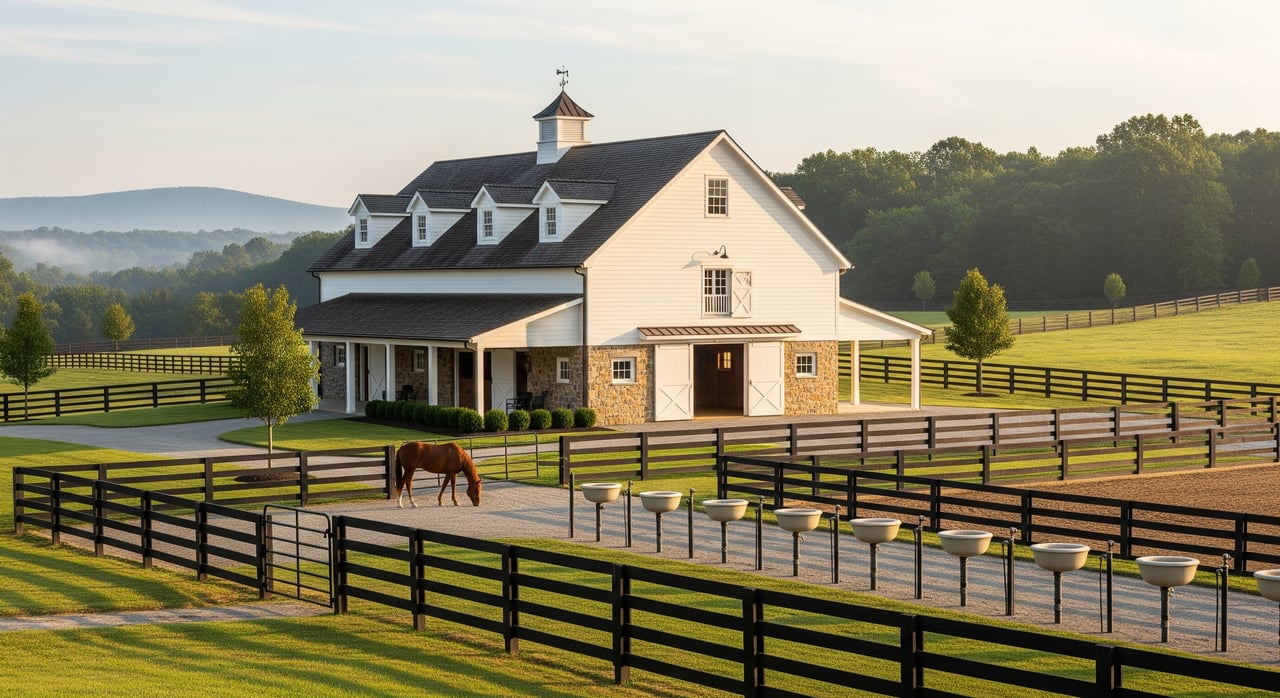
Good airflow reduces dust, ammonia, and moisture. In this climate, natural ventilation works well when you combine continuous ridge vents with soffit or eave inlets for stack effect. Open gable ends or adjustable vents help in warm months. Aim for higher eaves in aisles, around 10 to 12 feet, with stall walls at 8 to 9 feet to improve air exchange. Avoid direct cold drafts on resting horses in winter and keep stalls clean to control ammonia.
Lighting, safety, and finishes
Bring in as much natural light as possible, then add protected fixtures for dark mornings and evenings. Place electrical panels and outlets per code, with covered outlets in tack and feed rooms. In stalls, rubber mats over a well-drained base improve comfort and reduce bedding use. A wash bay with hot water and good drainage is a worthwhile upgrade if budget allows.
Paddocks that stay dry and safe
Sacrifice area basics
A sacrifice area is your go-to turnout during wet weather or when you are resting pastures. Place it near the barn for daily efficiency and grade it with a gentle 1 to 2 percent slope away from buildings. Size depends on your herd and goals. Many small properties target 0.1 to 0.25 acre per horse for daily turnout in a sacrifice lot. Design runoff to flow into vegetated filters rather than driving lanes or neighboring properties.
Surfacing that beats mud
On well-drained ground, a geotextile fabric topped with compacted stone or fines holds up to heavy use. In tighter soils, consider deeper aggregate layers or engineered systems like grids with stone infill for high-traffic gates and feeding zones. Add French drains where water collects and route flows into swales or retention areas before they enter streams.
Rotational grazing layout
Divide pasture into multiple paddocks so grass can recover. A practical starting point is 4 to 8 paddocks, with enough area to provide 3 to 7 days of grazing in each during peak growth and 21 to 28 days of recovery. Traditional continuous grazing guidelines in this region are about 1 to 2 acres per horse. With active rotational management, many owners reduce that to 0.5 to 1.0 acre per horse, but it requires careful timing, soil testing, and mowing.
Fencing, gates, water, and shelter
Choose sturdy, visible fencing without sharp edges, such as board, vinyl, or high-tensile with a visible top. Place gates to streamline horse movement and equipment flow, and build lanes wide enough for tractors. Provide reliable water in every paddock, whether permanent or portable. Add run-in shelters or shade where appropriate, built on well-drained pads.
Drainage, manure, and stewardship
Direct water the right way
Start with a site assessment that maps slopes, seasonal wet spots, and any nearby streams or wetlands. Grade pads around barns and sheds with 1 to 2 percent fall away from structures. Where runoff concentrates, install grassed swales, French drains, and sediment traps. Use vegetated buffer strips between high-use areas and waterways to filter sediment.
Smart manure storage
Treat manure as both a resource and a responsibility. Build a well-drained or impermeable pad with runoff diverted to vegetated areas. Composting reduces volume, kills parasites, and creates a useful soil amendment for fields. Place storage where a tractor or service can access it without tracking through wet ground.
Nutrient management context
If your stocking rate is high or your fields drain to sensitive waters, a nutrient management plan may be advisable or required. Base any manure or fertilizer applications on soil tests to avoid nutrient buildup. These practices protect water quality and often improve forage production over time.
Labor savers that boost welfare
Daily flow and storage
Keep feed and tack rooms adjacent to stalls to reduce steps. Centralize muck and bedding storage with clear equipment routes. Design gates and aisles wide enough for the tools you actually use so chores are smooth and safe.
Waterers and feeders
Heated or frost-protected automatic waterers cut daily bucket time, though you should still clean them regularly. In group settings, use gravity or automated feeders with care to reduce competition. Plan utility runs during the initial build to avoid later trenching.
Surfaces and shelter pay off
Engineered sacrifice areas, hardened gate pads, and well-sited shelters reduce mud, bedding turnover, and fence repairs. Group turnout with compatible horses supports mental and physical health and reduces stall cleaning time. The right footing in high-traffic paths often pays for itself in saved labor.
Cost and maintenance tradeoffs
Engineered surfacing and mechanical ventilation cost more up front but often save time every day. Natural ventilation and gravel surfacing cost less initially but may need more maintenance. Choose the mix that fits your horses, soils, and budget.
Quick site plan checklist
- Soil map and recent soil test results; note floodplain or wetland areas.
- Barn orientation for sun, wind, and drainage; ridge and eave ventilation plan.
- Stall count and sizes; aisle widths; wash, tack, and feed room locations.
- Sacrifice area placement, size, slope, and surfacing specifications.
- Paddock map with rotation sequence, water access, and shelter.
- Manure storage or composting area with defined runoff routing.
- Fencing types, gate locations, and lanes for equipment.
- Trailer access, tractor turning radii, and all-weather paths.
- Utilities for water, electric, and frost protection for waterers.
A well-planned Loudoun horse property works with our climate, not against it. If you are buying, renovating, or fine-tuning your farm, we can help you evaluate soils, drainage, and facilities so your daily routine is easier and your horses thrive. To talk through your plans or tour properties that fit your needs, reach out to Horse Farms & Country Homes.
FAQs
What stall size works for most horses in Loudoun?
- For most adult riding horses, 12 by 12 feet is a reliable standard, with 12 by 14 or larger for big horses or foaling.
How wide should my barn aisle be for safe handling?
- Plan 10 to 12 feet for horses and handlers, and 12 to 14 feet if tractors or hay wagons will pass through.
How large should a sacrifice area be per horse?
- A practical target is about 0.1 to 0.25 acre per horse, sized to your turnout habits and herd dynamics.
How many paddocks do I need for rotational grazing?
- Start with 4 to 8 paddocks, aiming for 3 to 7 days of grazing per paddock and 21 to 28 days of recovery in peak growth.
How can I control mud at gates and watering areas?
- Use geotextile and compacted stone, add drains where needed, and direct runoff into vegetated swales or buffers.
Do I need permits or a nutrient plan before building?
- Check county setbacks and any Chesapeake Bay watershed requirements; higher-density operations may need nutrient or manure management plans.