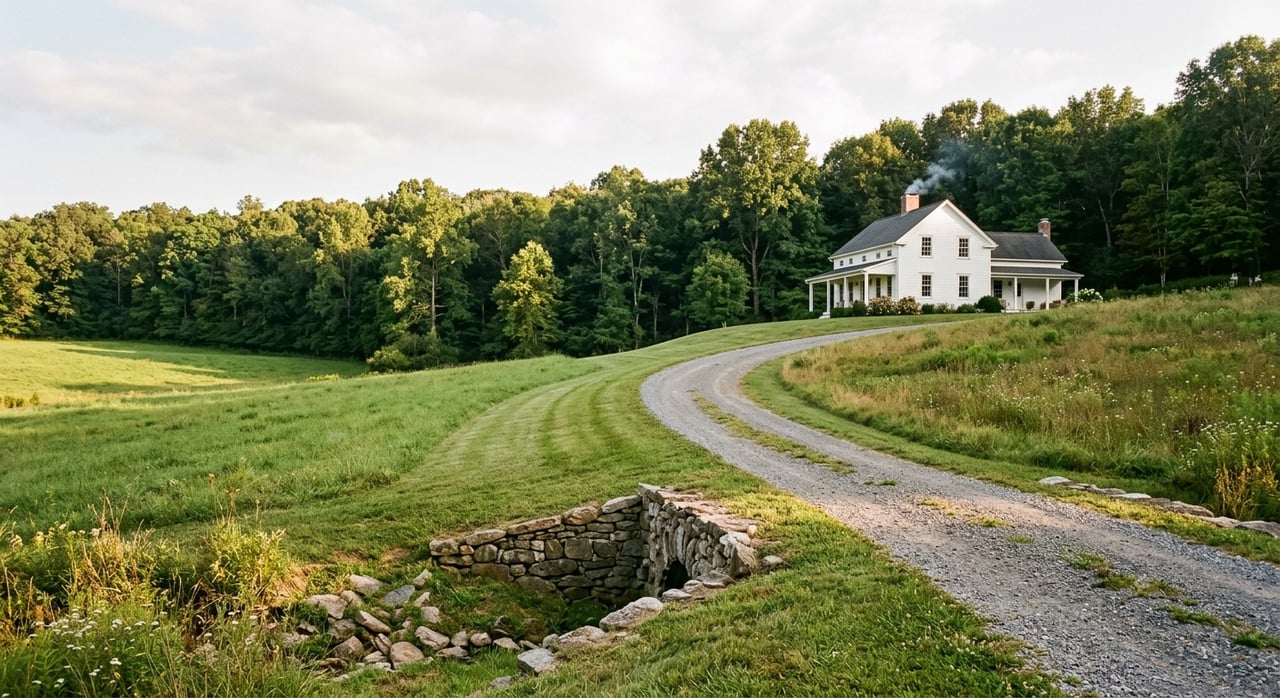
Dreaming about a country home on your own piece of land in Loudoun County? It is easy to picture the long driveway, open views, and room to breathe, but buying rural land here takes more than falling in love with a pretty parcel. If you want to avoid costly surprises, you need to understand zoning, buildability, utilities, access, and tax rules before you close. Let’s dive in.
Why Loudoun land needs extra homework
Loudoun County is not a market where you can assume acreage works like a blank canvas. Under the county’s 2019 Comprehensive Plan, the western two-thirds of Loudoun is the Rural Policy Area, where the county aims to support rural-economy uses and limited residential development.
That matters if you are buying land for a country home, a small equestrian setup, a hobby farm, or simply privacy with long-term value. The right parcel can offer all of that, but the wrong parcel may come with restrictions that limit where and how you can build.
Start with zoning first
Before you think about floor plans or fencing, confirm the property’s zoning district. Loudoun’s current Zoning Ordinance was adopted on December 13, 2023, and the county states that the official zoning map is its GIS/WebLogis map.
For rural buyers, the zoning district shapes what may be possible on the land. Loudoun explains that legacy districts such as A-3 and A-10 remain in place in some areas, but they are intended to phase out and cannot expand beyond existing boundaries. Current rural districts such as AR-1 and AR-2 are tied to the Rural North and Rural South place types and support uses connected to the rural economy, open space, equine activity, tourism uses tied to agriculture, and preservation of viewsheds, according to the county’s zoning FAQ.
Do not stop at the zoning label
A zoning district is only the start. Loudoun specifically cautions that private proffers, easements, covenants, and HOA rules can create additional limits beyond zoning.
In practical terms, that means two parcels with the same zoning may not offer the same flexibility. One may have straightforward building options, while another may have recorded restrictions that affect homesites, access, clearing, or future improvements.
Check whether the land is truly buildable
A parcel can be beautiful and still be difficult or expensive to build on. Loudoun regulates development in sensitive areas through overlay districts and natural-resource layers that include floodplain, mountainside, limestone, river and stream corridor resources, sensitive soils, and steep slopes, as shown on the county’s overlay district resources.
This is one of the biggest reasons rural land purchases require careful due diligence. You are not just buying acreage. You are buying the usable part of that acreage.
Floodplain can change the equation
Floodplain is more than a line on a map. Loudoun states that its Floodplain Overlay District is based on FEMA flood maps, and if any part of a structure’s footprint is in the floodplain, flood insurance is required when the mortgage comes from a federally insured lender.
Even if you love waterfront character or low-lying meadow views, floodplain can affect siting, design, insurance costs, and financing. It is important to know early whether your preferred homesite overlaps a regulated area.
Slopes, mountainside, and limestone matter
Topography can also limit what you can do. Loudoun says mountainside areas have added standards to reduce erosion and soil slippage and to protect water resources. The county also maps steep slopes countywide, defining them as areas with a 15% grade or greater, and notes that these cover about 50,000 acres in the county’s natural environmental overlay information.
Limestone terrain deserves special attention too. Loudoun notes that limestone-karst areas north of Leesburg and west of the Catoctin Mountain can involve sinkholes, springs, and groundwater contamination risk.
For you as a buyer, the takeaway is simple: scenic land may still have a narrow buildable envelope. A parcel can look open and appealing from the road while hiding costly grading, engineering, or placement challenges.
Prime soils can affect future plans
Loudoun is also placing added emphasis on preserving farmland soils. In June 2024, the Board of Supervisors amended the zoning ordinance to preserve prime farmland soils in AR-1 and AR-2, with the amendment effective March 12, 2025. For qualifying clustered projects with at least five non-contiguous acres of prime farmland soils, at least 70% of those soils must be preserved, according to the county’s prime agricultural soils page.
If you are considering a country home with agricultural or land-management goals, this is another reason to understand the site in detail before making assumptions about layout or future division.
Verify water, sewer, and septic early
One of the most common mistakes land buyers make is assuming utilities will be easy. In Loudoun County, that is not always the case.
Start by checking whether the parcel falls within Loudoun Water’s service area. Loudoun Water specifically directs users to confirm service-area coverage before requesting service.
If public water or sewer is not available, you may need private systems. Loudoun says a well permit and septic permit are required before work begins, and after a well is drilled, the water must be tested and the results sent to the Health Department.
Existing records can help
The county’s well and septic records can be useful if the parcel has an existing system or if you want to review historic files tied to an unbuilt subdivision. These records can help you and your consultants understand what has already been approved, installed, or studied.
If a parcel depends on private utilities, you will want clear answers about well location, septic field feasibility, reserve area, and how these elements fit with the house site and driveway. That is especially true on irregular, sloped, or environmentally constrained land.
Confirm legal and practical access
Access can make or break a land purchase. You should verify whether the parcel fronts a public road, depends on a private road, or relies on a recorded easement.
Loudoun notes on its zoning information page that subdivision may be allowable by right in many rural districts if zoning requirements are met, but lot access rules, private-road maintenance notes, and recorded easements still matter.
Driveway work may also require state approval. VDOT states that a land use permit is required for work in state right-of-way and for construction or modification of private or commercial entrances.
Driveway placement affects more than convenience
Loudoun also says permanent occupied structures receive addresses based on the point where the driveway intersects the road. That means driveway placement can affect the future address and emergency access.
For larger rural parcels, that detail can matter more than buyers expect. A driveway that looks easy on paper may become more complicated once you account for slope, sight lines, right-of-way requirements, and the preferred homesite.
Use county tools, but know their limits
Loudoun offers a helpful Locational Clearance Review Mapping Tool that can show setbacks, clearing, grading, wells, and driveways. It is a smart way to begin sketching out whether a parcel may support the country home you have in mind.
Still, the county clearly states that these maps are not surveyed and that additional surveyed information or engineering analysis may be required. In other words, mapping tools are a strong starting point, not a substitute for professional site work.
Understand tax status before you buy
Some rural parcels in Loudoun benefit from the county’s Land Use Assessment Program, which may defer some real estate taxes on land used for agriculture, horticulture, forestry, or open space. The county says the program is intended to preserve land, conserve natural resources, and reduce pressure to convert land to more intensive uses.
That can be valuable, but it can also create future tax exposure. Loudoun’s Land Use Assessment FAQ explains that changing to a non-qualifying use, rezoning to a more intensive use, or splitting off lots can trigger rollback taxes based on the difference between use value and fair market value for the previous five years, plus interest.
Ask whether the land is in an agricultural district
Some parcels may also be inside an Agricultural and Forestal District. Loudoun says the program began in 1979 and that in 2024, more than 40,000 acres were enrolled across 21 districts, according to the county’s Agricultural and Forestal Districts information.
If tax treatment or district enrollment is part of the property’s appeal, make sure you understand what current status means for your intended use. It is much better to know this before closing than after making plans that change the land’s qualification.
Review title documents carefully
For rural land, title review should go deeper than the basics. Loudoun provides remote land records access, and buyers should review deeds, plats, easements, covenants, and any rezoning proffers before closing.
This step is especially important if you are counting on a specific homesite, driveway route, barn location, or future lot configuration. Utility easements, access easements, and private restrictions can all affect the way the land functions.
Build your due diligence team early
Because Loudoun’s mapping tools are not surveys and site-specific issues often require technical review, it is wise to involve the right professionals early. For many land purchases, that means a surveyor, engineer, and land-use attorney before you finalize the deal.
That level of care is not about making the process harder. It is about protecting your investment and helping you move forward with confidence.
A practical land-buying checklist
Before you buy land for a country home in Loudoun County, make sure you can answer these questions:
- What zoning district is the parcel in?
- Are there private proffers, easements, covenants, or HOA restrictions?
- Is there a realistic buildable area for a house, driveway, well, and septic field?
- Do floodplain, steep slopes, limestone, or sensitive soils affect the site?
- Is public water or sewer available through Loudoun Water?
- If not, what will private well and septic approvals require?
- Is access from a public road, private road, or recorded easement?
- Will a new or modified entrance require a VDOT permit?
- Is the property in land use assessment or an agricultural district?
- Could your planned use trigger rollback taxes?
Buying land in Loudoun County can be deeply rewarding when the parcel matches your goals, your budget, and the realities of the site. If you want experienced guidance as you evaluate acreage, equestrian land, or country property opportunities, Horse Farms & Country Homes can help you approach the process with clarity, care, and a strong understanding of Virginia’s rural market.
FAQs
What should you check first when buying land for a country home in Loudoun County?
- Start with zoning, overlay districts, access, and utility availability so you know whether the parcel can realistically support your plans.
How do floodplain and steep slopes affect Loudoun County land purchases?
- Floodplain, steep slopes, mountainside rules, and other overlays can limit building areas, increase costs, and affect insurance or design requirements.
How can you verify water and sewer service for land in Loudoun County?
- Use Loudoun Water’s service-area map first, and if public service is not available, review county well and septic permit requirements and records.
Can land-use tax status change after you buy rural property in Loudoun County?
- Yes. If a property is in land use assessment, changing to a non-qualifying use or taking other triggering actions may result in rollback taxes and interest.
Why do easements and plats matter when buying rural land in Loudoun County?
- Deeds, plats, easements, covenants, and proffers can limit access, building locations, utilities, and future use even when zoning appears to allow your plans.