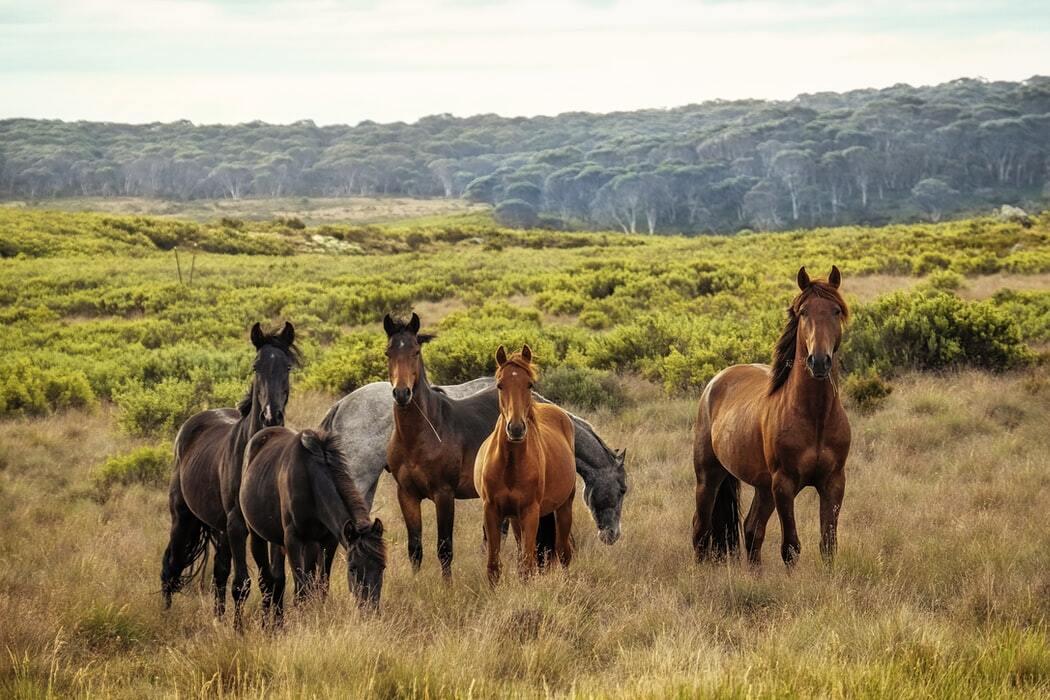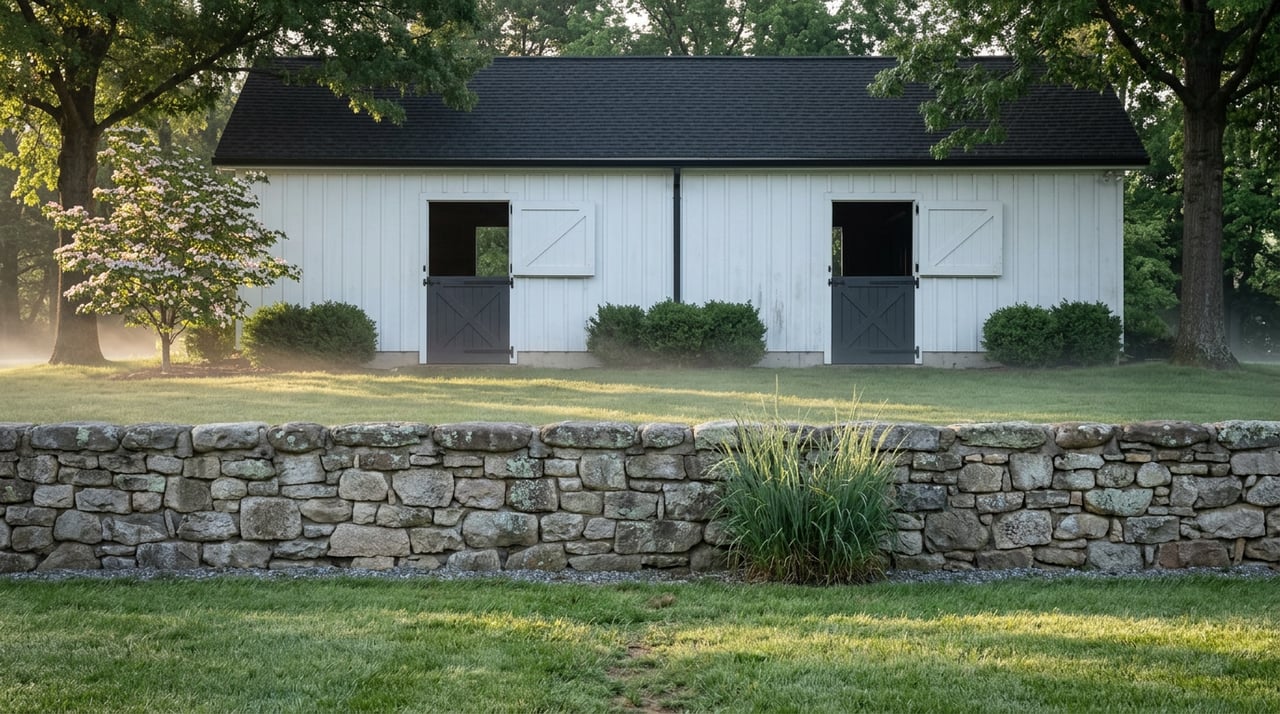
Two horse farms sit on opposite sides of the same rural road in western Loudoun. Same acreage. Same white board-and-batten barn, same twelve stalls, same outdoor ring. One can board horses for paying clients and host a weekend schooling show. The other cannot, not without a special exception from the county, because the way each parcel's stable use is classified under Loudoun's zoning ordinance has nothing to do with what the barn looks like and everything to do with a use category that never appears on either listing sheet.
That gap is worth understanding before you write an offer, because Loudoun is in the middle of rewriting the rules that draw it.
The zoning classification you can't see on a listing sheet may matter more to a horse farm's value than the extra five acres you can.
The Classification a Listing Sheet Won't Show You
Loudoun's zoning ordinance separates horse-keeping into distinct uses, each governed by its own section of the code: Stable, Private for horses kept for an owner's personal use, Stable, Livery for boarding, lessons, and training conducted for paying clients, and Equestrian Event Facility for shows, clinics, and similar gatherings open to the public. The ordinance's stable, livery standards set acreage minimums, setback distances, and allowable structure sizes that differ enough between categories that two identical barns on identical acreage can sit on opposite sides of what's legally permitted.
| Use Category | What It Covers | Where the Friction Shows Up |
|---|---|---|
| Stable, Private | Horses kept for the owner's own use | Fewest restrictions, but no paying boarders or clients |
| Stable, Livery | Boarding, lessons, training for clients | Acreage minimum and setback rules govern whether the use is even allowed |
| Equestrian Event Facility | Shows, clinics, public gatherings | Structure size caps can conflict with a standard arena footprint |
The gap has been a sore point for years. In comments filed during the county's broader zoning rewrite, the Loudoun County Equine Alliance argued that a 25-acre minimum for livery use priced out many working horse farms and pushed for a 10-acre threshold instead, noting that pasture stocking rates, not an arbitrary acreage floor, should determine how many horses a property can reasonably support. The same comments flagged a more basic conflict: a standard indoor arena runs roughly 100 by 200 feet, a footprint that alone exceeded the total structure allowance the draft ordinance set for many parcels under 25 acres. A farm could own the acreage and the equipment for a full training operation and still not be permitted to build the arena that operation needs.
A Rulebook Currently Being Rewritten
None of this is settled. In September 2024, the Board of Supervisors approved a project, formally CPAM-2024-0002 and ZOAM-2024-0002, to rewrite the rural uses and standards specific to western Loudoun. The process has moved in clear stages:
- November 2024 — stakeholder work sessions begin, with the first meeting focused specifically on stables, liveries, and outdoor recreation.
- Through February 2026 — seven rounds of work sessions cover agricultural processing, farm wineries, the mountainside overlay district, and related rural topics.
- March 2026 — the Transportation and Land Use Committee votes 4-0, with one member absent, to forward specific recommendations to the full Board.
- Board vote and committee review, spring and summer 2026 — full Board consideration was expected in May 2026, followed by six Zoning Ordinance Committee meetings beginning in June to work through specific language.
- Early 2027 — Loudoun's own planning department puts final adoption of the ordinance, following Planning Commission review, on this timeline.
That's a multi-year process, and as of this writing in August 2026, the ordinance still has not been finalized. Anyone shopping for a Loudoun horse farm right now is buying under the existing rules, not the ones still moving through committee.
What the March 2026 Recommendations Would Actually Change
The specifics matter more than the timeline. According to reporting on the committee's recommendations, four changes stand out.
Equestrian uses on a working farm would no longer be regulated separately as an agricultural support activity, as they are under current rules. They'd fall under the farm's core agricultural classification instead, a shift industry advocates have been pushing for since at least 2022.
The setback requirement for private and livery stables, currently a range of 60 to 120 feet from the property line when a neighboring home sits nearby, would become a flat 60 feet. On a smaller parcel where a stable's placement is already constrained by topography or an existing structure, that's the difference between a buildable site and a dead end.
Hours of operation for private and livery stables would run 7 a.m. to 11 p.m., but that window would specifically exclude horse care, grooming, and cleaning, meaning the actual barn work would not be time-restricted the way public-facing lesson or boarding activity would be.
And a guest farm or ranch use, present in the 1993 zoning ordinance and later dropped, would return as an accessory use on working agricultural operations that meet specific standards, opening a path to farm-stay style income that current zoning doesn't recognize as a permitted use at all.
Every one of those items changes what a given parcel can generate in income or accommodate day to day, independent of anything a buyer would see on a walk-through.
Why the County Is Loosening Instead of Tightening
Rural zoning rewrites in fast-growing counties usually tighten restrictions. Loudoun's is moving the other direction for the equine sector because of a scale the county's own advocacy groups have documented for years: Loudoun leads Virginia in both the number of horses and the number of equine farms, and the industry's annual economic impact in the county has been put at $180 million, a figure spanning boarding, breeding, feed, veterinary care, and event spectatorship that local officials and equine industry groups have cited consistently in recent years. That's not a hobby sector asking for favors. It's an established rural industry whose trade group has spent years arguing, with specifics like the arena-footprint conflict, that the existing rulebook doesn't match how the industry actually operates on the ground.
That backdrop is worth keeping in mind against the current market. As of this writing, active equestrian listings in Loudoun County span from properties priced in the high six figures up toward several million dollars, with parcel sizes commonly landing in the 10 to 30 acre range, the exact band where livery-use acreage minimums have been most contested. A buyer evaluating that inventory today is pricing land and improvements. What the zoning rewrite adds is a second, less visible variable: how much of that land's income potential is currently locked by a classification that may look different by 2027.
What This Means If You're Looking at a Loudoun Property Now
None of the proposed changes are law yet, and a buyer or seller should treat them as exactly that: proposed. A property currently zoned in a way that prohibits commercial boarding cannot be marketed or financed on the assumption that it will be reclassified. But a few habits are worth adopting for anyone actively evaluating western Loudoun horse properties this year.
Ask what use the parcel is currently permitted for, not what the barn was built to do. A twelve-stall barn built decades ago under different rules may or may not carry a livery designation today. Confirm acreage against the current minimum for the use you intend, since the 25-acre livery threshold the industry has pushed back on is still the operative standard until the ordinance actually changes. And if you're comparing two similarly priced properties where one sits just under a contested acreage line and the other sits comfortably above it, price that difference into your offer, because it may not exist as a difference once the ordinance is finalized.
Our own guide to the Loudoun County equestrian property market goes deeper into acreage assessment programs and financing paths for working farms, and it's worth reading alongside this piece if you're comparing specific parcels.
A Few Common Questions
Does this zoning rewrite apply to all of Loudoun County, or just the rural west? The current process, CPAM-2024-0002 and ZOAM-2024-0002, is specific to western Loudoun's rural uses and standards. It doesn't touch zoning in the county's suburban east.
When do the new rules actually take effect? Not yet. The Board's recommendations moved into committee review after the March 2026 vote, with the county's planning department targeting final adoption in early 2027. Until then, the existing ordinance governs every parcel.
Does bona fide agriculture status still matter for horse farms under the proposed changes? Yes. The recommended change would fold equestrian uses into a farm's agricultural classification rather than treating them as a separate support activity. That's a shift in how the use is categorized, not a removal of agricultural status requirements.
If you're weighing a horse farm purchase, or thinking about what a sale looks like before or after this ordinance lands, the details above are exactly the kind of thing worth walking through parcel by parcel. Horse Farms & Country Homes has spent years inside Loudoun's barns, arenas, and zoning maps alike, and we're glad to look at a specific property with you. Book an Appointment to start that conversation.